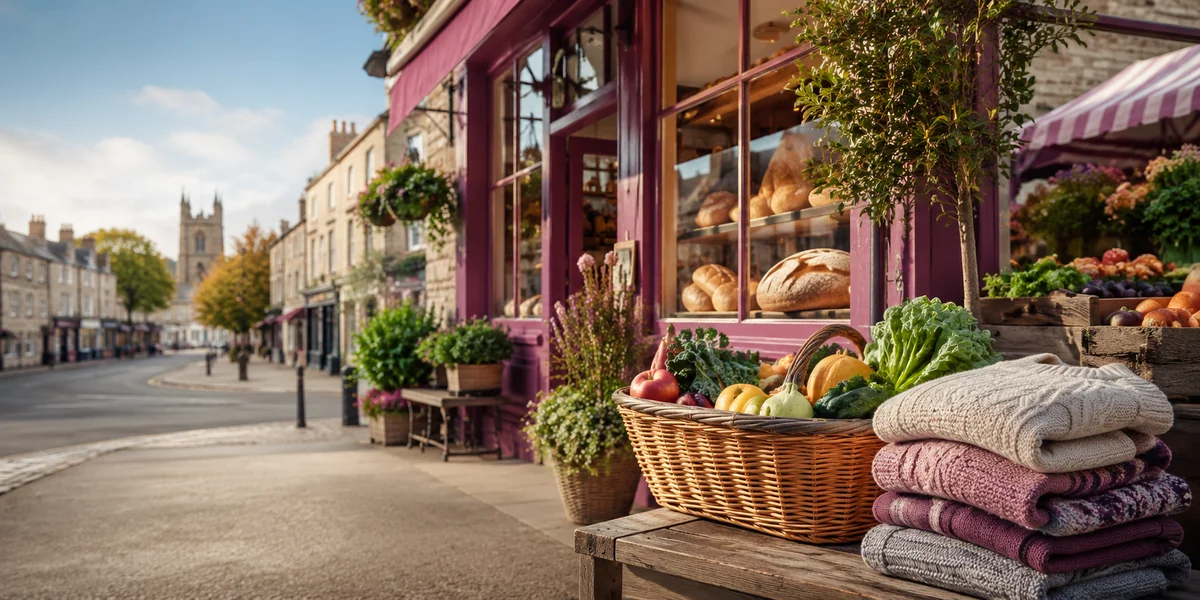
Glasgow is an excellent city in which to understand how British food has changed. The city can offer a full Scottish breakfast in the morning, fish and chips at lunchtime, a Sunday roast in a pub and, at the other end of the spectrum, highly refined modern British cooking built around seasonal Scottish produce. That range matters because “British food” is not one fixed cuisine. It is a collection of regional traditions shaped by agriculture, fishing, industry, migration, class, trade and changing restaurant culture. In Glasgow, the Scottish part of that story is especially visible. Oats, potatoes, beef, game, fish, shellfish, black pudding, haggis and root vegetables sit alongside dishes that developed across Britain more broadly. For a high-end reference point, the Michelin Guide's 2026 Glasgow selection includes UNALOME by Graeme Cheevers as a one-star Modern British restaurant. Its presence in Finnieston shows how far the city's food scene has travelled from purely practical, filling meals towards contemporary fine dining without losing sight of Scottish ingredients.
Glasgow's food story: industry, migration and the Scottish larder
Glasgow grew dramatically during the industrial era, and that history helps explain the city's relationship with food. Working people needed meals that were affordable, filling and practical. Potatoes, oats, soups, stews, pies, fried foods and inexpensive cuts of meat all fitted that need. Scotland's climate and geography also shaped what was available. The country has long relied on oats, livestock, root vegetables and seafood, while the surrounding seas provide a wide range of fish and shellfish.
That background is still visible in traditional Scottish dishes. VisitScotland's guide to traditional Scottish food highlights haggis, Scotch broth, cock-a-leekie soup, stovies, mince and tatties, steak pie, porridge, tattie scones, Lorne sausage and black pudding. These are not luxury dishes in origin. Many come from a culture of making sensible use of available ingredients and turning simple components into warm, substantial meals.
Glasgow's food culture also developed through migration. Italian cafés, South Asian restaurants, Chinese takeaways and many other communities became part of everyday eating in the city. That means the modern Glasgow table is broader than an old-fashioned list of Scottish classics. A person can still find traditional dishes, but they now sit within one of Britain's most diverse urban food cultures.
Finnieston is a useful example of that change. Once associated strongly with docks, warehouses and industry, the wider area is now known for restaurants and bars as well as its industrial heritage. The neighbourhood's transformation mirrors Glasgow's shift from a heavy-industry city towards a service, culture, tourism and hospitality economy. Modern restaurants here can use the same Scottish larder—beef, fish, shellfish, vegetables and game—but present those ingredients with techniques drawn from France, Japan and elsewhere.
This is why Glasgow is a better place to discuss British food than a simple stereotype might suggest. The city preserves hearty working food, absorbs outside influences and supports high-end kitchens at the same time.
Why UNALOME represents the modern end of British dining
UNALOME by Graeme Cheevers is a useful restaurant to represent Glasgow's contemporary high-end scene because it combines Scottish ingredients with modern European and international technique. The restaurant's own history states that it opened in June 2021 and received a Michelin star in the 2022 guide, only months after opening. The official UNALOME story also explains that Graeme Cheevers draws on Japanese inspiration and traditional French techniques alongside his Scottish background.
That combination is important. Modern British cooking is often less about reproducing old recipes exactly and more about applying contemporary technique to ingredients and flavour traditions associated with Britain. A chef might use Scottish seafood, beef, vegetables or game but treat them with a lighter sauce, more precise cooking, fermentation, Japanese seasoning or classical French preparation.
UNALOME's current menu page says its menus change with the seasons and are designed around the best ingredients available at the time. That means anyone visiting should check the current menu rather than expect a permanent list of signature dishes. A Michelin-starred restaurant is not necessarily the place to look for a literal plate of fish and chips or a full Scottish breakfast. Its relevance lies in showing what British and Scottish ingredients can become in a modern fine-dining context.
This distinction protects against a common misunderstanding. Traditional cuisine and fine dining can belong to the same food culture without serving the same dishes. A Sunday roast in a pub and a carefully plated tasting menu may share ingredients, memories or flavour references, but they serve different occasions.
For visitors, this creates a useful two-level experience. One meal can explore contemporary Glasgow through a restaurant such as UNALOME, while another can focus on dishes that have been part of everyday British or Scottish life for generations.
The classics: fish and chips, full Scottish breakfast and Sunday roast
Fish and chips is one of the dishes most closely associated with Britain. Its exact origin is debated, but Historic UK's account of fish and chips places the combination firmly in the nineteenth century, when fried fish and chipped potatoes became an affordable meal for Britain's growing industrial population. By the late nineteenth and early twentieth centuries, fish-and-chip shops had become common in towns and cities.
In Glasgow, fish and chips fits naturally into the history of an industrial working city. A typical version uses battered white fish with chips, often accompanied by salt and vinegar, peas, tartare sauce or other regional additions. The dish is simple, but good execution depends on fresh fish, crisp batter, properly cooked potatoes and oil managed at the right temperature.
The full Scottish breakfast is another useful window into local food culture. It overlaps with the full English breakfast but has distinctly Scottish elements. VisitScotland describes a typical version as including eggs, bacon, sausages, baked beans, tattie scones, toast and a choice of haggis or black pudding. Lorne sausage—the square sliced sausage—is another recognisably Scottish addition. The meal reflects an older preference for substantial breakfasts, especially in physically demanding working environments, although today it is as much a weekend, café or visitor experience as an everyday necessity.
Sunday roast belongs to the wider British tradition rather than Scotland alone. Roast beef is the famous version, but chicken, lamb and pork are also common, usually served with roast potatoes, vegetables, gravy and often Yorkshire pudding. In Scotland, local beef and lamb can give the meal a particularly regional identity. The key cultural point is the occasion: the Sunday roast is associated with family meals, pubs and a slower communal lunch rather than fast weekday eating.
Other dishes deserve equal attention. Steak pie is strongly associated with Scottish home-style cooking, while haggis with neeps and tatties remains one of the country's most recognisable combinations. VisitScotland's haggis guide describes the dish as a savoury mixture traditionally based on meat, oatmeal, onion and spices and notes its close association with Burns Night on 25 January.
These foods help explain why British cuisine should not be judged only by presentation. Many of its best-known dishes were designed around practicality, seasonality and comfort rather than visual theatre.
What makes Scottish food distinct inside the wider British tradition
British cuisine is often discussed as if England, Scotland, Wales and Northern Ireland share one identical food culture. They do not. There is overlap, but Scotland has its own ingredients, dishes and eating habits.
Oats are one obvious example. Porridge has deep roots in the Scottish diet, and oats also appear in haggis and baking. Potatoes feature in tattie scones, stovies and many home-style dishes. Scotland's cattle and sheep farming support strong beef and lamb traditions, while its coastline and islands contribute salmon, haddock, scallops, langoustines and other seafood.
Breakfast shows the difference clearly. A full English breakfast and a full Scottish breakfast share bacon, eggs, sausage and toast, but the Scottish plate may add haggis, black pudding, tattie scones and Lorne sausage. The distinction is not absolute—restaurants vary—but the regional identity is real.
Soups also reveal older habits. Scotch broth uses barley with vegetables and meat, while cock-a-leekie is traditionally built around chicken and leeks. These dishes reflect a cooking culture in which grains, roots and slow-cooked ingredients were central.
At the same time, modern Scottish chefs are not limited to preserving historical recipes. Restaurants such as UNALOME show how Scottish produce can sit inside a global culinary language. A local ingredient may be prepared using French technique or matched with Japanese flavours. That does not make the food less Scottish; it reflects the way living cuisines evolve.
This balance between regional identity and outside influence is particularly natural in Glasgow. The city has always been outward-looking through trade, migration and industry. Its food culture therefore combines local memory with international influence more visibly than a museum-like version of “traditional food” ever could.
How to eat across Glasgow without confusing tradition with fine dining
A good Glasgow food itinerary should not force every meal into the same category. Traditional food, pub food, takeaway food and Michelin-starred dining each answer a different question.
For a high-end dinner, UNALOME offers a contemporary interpretation of Modern British cooking. Visitors should use the restaurant's official menu and booking information because dishes and availability change seasonally. For traditional breakfast, a café serving a full Scottish breakfast provides a much more direct experience of tattie scones, Lorne sausage, haggis or black pudding. Fish and chips is best understood in the context of a fish-and-chip shop or casual restaurant rather than fine dining. A Sunday roast belongs naturally in a pub or brasserie where the social ritual is part of the experience.
It is also worth trying dishes that are specifically Scottish rather than only those known across Britain. Haggis, neeps and tatties, Scotch broth, steak pie, stovies or cranachan each reveal a different part of the country's food history.
The most useful way to understand Glasgow is therefore to eat across price levels. Fine dining shows the skill and ambition of the modern city. Everyday dishes show how people have actually eaten. Breakfast traditions show regional identity. Pubs and chippies preserve communal habits that are as culturally important as tasting menus.
Calling one restaurant “the best” or “five-star” can be subjective, so it is better to rely on verifiable recognition. As of the 2026 Michelin Guide, UNALOME is a one-Michelin-star Modern British restaurant in Glasgow. That makes it a defensible high-end example without pretending that restaurant stars and hotel-style five-star ratings are the same system.
Glasgow's strength is precisely this contrast: a city where industrial history, Scottish comfort food, immigrant influence and modern fine dining can all be part of the same day of eating.
Sources / References — checked 23 September 2026: Michelin Guide: Best Restaurants in Glasgow; UNALOME official story; UNALOME current menus; VisitScotland: Traditional Scottish Food; VisitScotland: Haggis; Historic UK: History of Fish and Chips.